
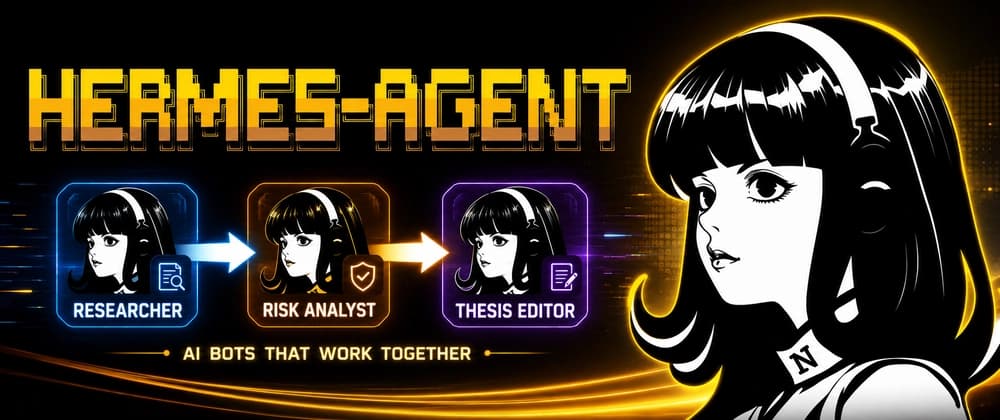
What if your AI agents behaved less like isolated chatbots and more like a team of specialists that could actually collaborate? 🤖
That’s what I wanted to test with the newly released Hermes Bot Mode desktop plugin.
Instead of manually switching between different Hermes profiles, copying context, and triggering every stage myself, I built a small team of three AI agents:
The goal was simple: see whether the agents could gather evidence, challenge each other’s work, and produce a final answer through agent-to-agent handoffs without me manually operating every stage.
It’s what Bot Mode changes about how we interact with Hermes Agent, persistent AI agents, and multi-agent workflows.
A profile can have its own configuration, model settings, soul, memory, skills, and tools.
Instead, it adds a visual usability and orchestration layer on top of Hermes profiles.
Hermes Profiles give you multiple isolated brains. Bot Mode gives those brains faces, rooms, and a team interface.
Instead of remembering profile names or managing everything through the CLI, you get a visible roster of bots.
🪪 Name and visual identity 🎯 Specialized role 🧠 Personality and memory 🛠️ Tools and skills 💬 Persistent conversation 🔄 Ability to communicate with other bots
Its job is to research two U.S.-listed companies in the same sector using public filings and reputable market data.
Revenue growth Margins Balance-sheet risk Valuation context Business catalysts
But I didn’t want the first agent’s answer to automatically become the final answer.
Are the reporting periods comparable? Are the numbers supported? Are valuation assumptions reasonable? What downside risks are missing? Is there contradictory evidence? Does any language sound like an unjustified forecast?
This creates an important separation between generating research and reviewing research.
It takes the evidence and critique from the previous agents and produces a balanced comparison containing:
📚 Sources 📅 Relevant dates 🎚️ Confidence notes ❓ Known unknowns ⚖️ A more balanced final analysis
Instead, the researcher gathered its evidence and then attempted to hand the work to the Risk Analyst.