
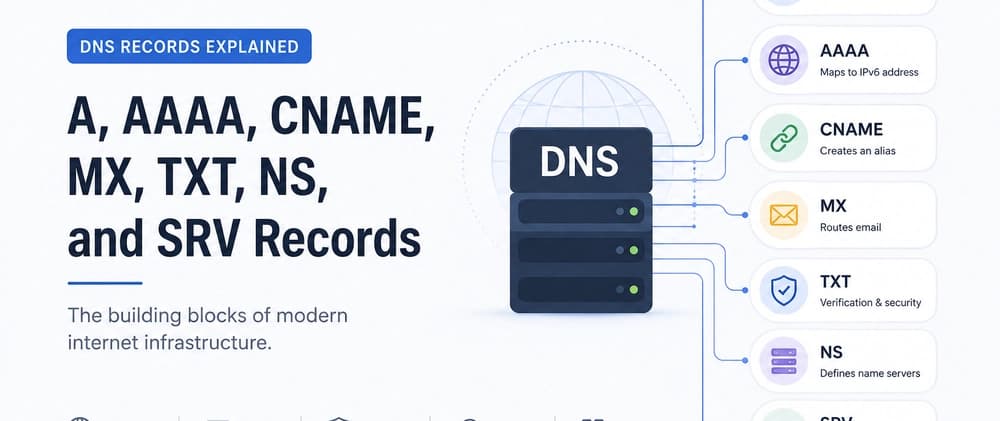
In the previous article, we explored how DNS translates human-friendly domain names into machine-friendly IP addresses and how a request travels through recursive resolvers, root servers, TLD servers, and authoritative nameservers before finally reaching a destination.
When a DNS resolver contacts an authoritative nameserver, it isn’t simply asking for an IP address.
Where websites live Where email should be delivered Which servers are authoritative How domains are verified How email is authenticated How cloud services are discovered How SaaS platforms connect custom domains How modern internet infrastructure operates
Whether you’re launching a website, migrating infrastructure, configuring email, deploying applications, implementing custom domains, or troubleshooting production systems, DNS records sit at the center of the operation.
Take an entire website offline Stop customer emails from arriving Break API connectivity Prevent SSL certificate issuance Disrupt SaaS onboarding Cause search engines to lose access to content
The irony is that DNS records are often configured once and forgotten until something breaks.
However, seven records power the overwhelming majority of websites, applications, email systems, and cloud services.
Record TypePrimary PurposeAMaps hostname to IPv4AAAAMaps hostname to IPv6CNAMECreates aliasesMXRoutes emailTXTVerification and securityNSDefines authoritative nameserversSRVService discovery
Browsers cannot locate servers Applications cannot connect APIs become unreachable
Even the most advanced infrastructure eventually depends on records that resolve to an IP address.
Almost every publicly accessible website uses A records somewhere in its architecture.
One of the most common infrastructure projects involves moving applications between servers.
Updating the A Record redirects traffic globally without requiring users to change anything.
This simple capability is one reason DNS remains such a powerful abstraction layer.
Cloud computing, smartphones, IoT devices, smart vehicles, and connected infrastructure accelerated address consumption dramatically.
If an application doesn’t properly support IPv6, users may experience connectivity problems despite having perfectly functioning IPv4 infrastructure.
If each hostname pointed directly to an IP address, every infrastructure change would require updating multiple records.
This approach allows millions of customer domains to connect to shared infrastructure while maintaining branding and flexibility.